Monday, September 5, 2011

Up the Hill Backwards?

My first two days of teaching this year were glorious. I was sure that I had become an electric being. Not only had my activities gone well, but I had become a tough disciplinarian. Like Harry Wong, I chose to be a smiling teacher, one that was excited to be in the classroom, not this stern warden that didn’t smile for 2 months. I did my best to let my students know I was there for them, and that I wanted to get to know them, but I was also able to switch into an authority figure when they got too loud or began talking too much. My teaching highlight of the week was when I called down some seniors for leaving campus before their lunch passes were ready. I went from being a meek and timid teacher of freshman to a second year teacher drunk with authority. To top it all off, that Friday night, because of a mistake in directions, I ended up at dinner, alone, with the cute new science teacher. Then, as if things couldn’t go my way any further, I was on TV, seen in the background of Friday Football Fever.

Before the year began, I was informed by central office that my students had exceeded expectations on their test scores. Even if this was some ploy to boost my self-esteem, as I suspect it was, it had the desired effect and I was pleased. It’s not that my kids passed the EOC, it was just that, on the whole, they showed great improvement. This made me happy, but it also worried me. This year they would expect results. I didn’t relish the thought of having to duplicate results. I liked laboring under no expectations or beating low expectations. I excel at laziness.

My school is going through upheavals like never imagined. Principals are leaving left and right and we replaced 3/5 of our science department. There are tons of new teachers at the school. Last year there was just me; suffering alone in my room with only seasoned experts to guide me, no one save a student teacher that arrived in January to confide in. This year they were a unit, lots of them to rely on and share their burdens with, and I was determined to be there for them in any way they needed me.

The new teachers showed up after the first day with faces that must have mirrored mine. They looked as if bombs had gone off inches from their faces, blinded them with shrapnel, and deafened them with noise. Meanwhile, I was capable of doing a tango in the sky. I felt like it was my duty to look in on them, guide them, and help them. What I couldn’t offer them in real help; I could at least be a sympathetic ear. I was living proof things got better. In class on Saturday, I told all the new teachers that everything gets better, shinier, and faster in your second year. This was to be my new calling, a shepherd of new teachers. Of course, it didn’t hurt that the two teachers I checked on the most were blond cuties. Yes, yes I am sexist and awful.

My two days of glory extended beyond the classroom walls. My confidence on the battlefield of pedagogy transferred to my civilian life as well. Saturday continued my good fortunes as another beautiful woman was in my teaching class. She also taught in Alamance County and had a shock of beautiful red hair. Instead of staying from 9-4, we got out at 10:30, and I spent the afternoon with another delightful woman.

I can see how this is a bit personal and more than most people want to read about me. I’m also aware that I’m bragging very much, but after my first year of teaching I felt strange. I had crossed the finish line, but that was all I had felt I had done. I spent the summer in denial about having to go back work, and a vague feeling that things would be different or better, but mostly I thought I would fall into a sophomore slump. Also, my personal life and become a roller coaster ending in a bitter break up with a woman that had stood by in my long dark nights of the soul. I had one more class to take to obtain my license and I flip-flopped between giving up, giving it another go, and even pushing for my masters. In the end, I was too lazy and scared to find a new job. If nothing else, I knew that if economic times turned worse and there was no other job I could find, if I had my license I could always teach. Being practical about it, I knew I had a job at my school and great co-workers and support staff.

The last Sunday before I had to report back for teacher workdays I went swimming with my family in my parent’s pool. While swimming, I put on goggles and opened my eyes under water since the first time since I began swimming with contacts in my eyes. All summer swimming had felt like sensory deprivation, as I would curl up fetally, eyes closed and hover between the pool bottom and the real world. Now, I felt a sense of calm as I watched my niece and nephew glide under water like child super beings. I too knew what it was like to have the feeling of swimming as flying, but now I could see in 20/20 vision. I took a deep breath and knew this year would also be a plunge.

Once I was back at school and it felt great to be there. My room looked better than ever, and I came to discover I truly liked my school and my co-workers. Once teaching began, I realized my first year of teaching had sent me through the siege perilous, like some Arthurian knight, and I was remade a sharp katana forged in the heart of the sun. I knew I was zooming close to that same, life giving sun on wax wings, but I hoped and prayed I wouldn’t have that Sunday morning comedown. I didn’t. It happened on Monday.

I was wired on Monday morning with an activity designed, I thought, to bolster my students’ self esteem and let them know I was compassionate and caring for them. My students were tired and seemed to miss my point. I wanted to talk about failure, how first we must fail before we can succeed. I think the only thing they caught was that they would fail. Each block handled the lesson with less enthusiasm as their eyes rolled and heads dropped to their desk as my Tavis Smiley NPR interview played out its 6 minutes of forever. Then, they took their grammar pre-test, which they all failed. At lunch duty I felt awkward and unable to find the commanding voice I had so easily possessed a few days before. The other new teachers, of which I had become self-appointed protector/leader, had similar days. Instead of being their guide and listening to them, I screwed up and blabbed about how my teaching experiences had been and pretended to be a teacher capable of leaping a tall building in a single bound.

Tuesday was a bit better, but each day featured its varying degrees of failure. Not sending a kid out here or poor classroom management there. Reality had set in, looks like I was Peter Parker after all. Still, I was a better teacher. That much was true. I knew I couldn’t maintain the energy of my two glorious days forever, and I was somewhat glad the comedown came quickly. As I said to my mom, “If Monday is the worst day I have all year, this is going to be an amazing year.” It should be noted that my defeat on Monday was not a soul crushing blow, but simply not a spectacular landing. It all seemed bad in the hindsight of such an amazing early start. In fact, last year, that Monday would have obliterated me, left me lying awake at 3am dreading work, and wondering how I would escape my job/ death trap. Now, the bullets bounced off, and I was determined to not let my optimism waver.

On Friday night, as I trudged home at half time from a football game my school would end up losing, I was told by an AP that I had become the model for all the new teachers. My heroic arc of starting off bad to getting better would be there’s to follow as well. The APs could already tell I had grown as a teacher. I still don’t have much figured out, but I do have a lot of confidence on my side. Confidence that took a swift beating as each of the women from the previous week turned out to be married, with boyfriend, deny me, or simply not interested. I was back to square one.

The week stretched on to infinity and by Friday at 3:20, I limped across the finish line blistered, bruised, and tired. I’ve spent the weekend reading and sleeping in an effort to recover and prepare myself for the long haul to Halloween. I’m attempting to recommit myself to becoming a better teacher as I had planned all along before I got sidetracked with easy success, false shepherding, and cute girls. Maybe I was Peter Parker again, but Peter Parker is still Spider-Man. For two days I rode the madness of the superman Nietzsche had spoken of. I can do it again.

Tuesday, July 26, 2011

Letter to My Students

Dear Students,

I’m going to make a guess here, and call me out if I’m wrong, I bet that many of you don’t like writing, but I bet you don’t understand that most of you write more than I ever did when I was in high school. Maybe you’re not writing an essay everyday or writing a novel, but I bet many of you texted your friends this morning, updated your Facebook status, commented on a photo, and some of you might have written a blog or contributed to a fan-fiction story. The cool thing about literacy is that it’s very large and it’s very diverse. In many Language Arts classes, a lot of your teachers might have taught you to write an essay or maybe a research paper, but they overlooked very common forms of writing that are important to things we do every day.

I keep lists all the time, things I need to do, things I need to buy, or just random thoughts. That’s a form of writing that’s very important and can help you later in life. It’s a small skill, but an essential one. Many of you might have dreams to go to college, some want to just get a job, and a few may join the armed forces, but the skills you will learn in this class will help you in any area of your life.

What will you do with your time when you aren’t working or hanging out with friends? What books, music, movies, or video games might you want to spend your hard earned on money on? Literacy can help you make those decisions so that when you pay for those things you’re not being robbed of your money. What about when you’ve got a huge reading assignment for your science class? The skills you’re taught in this class can help you across the board.

You will engage in literacy everyday, not just in school, and not just at your job. However, the better your literacy skills are the better you’ll do in school , the better the job you’ll get, and the better the job you have, the more money you make! Literacy teaches you to think deeply about topics, examine various angles, and connect world ideas to your community.

It’s not that we’ll just a read a book in here, but you have to understand how to read a book, a short story, a play, a poem, an article, a editorial, watch a movie and think about all the different things happening in your noggin as you are doing those activities. It’s not just reading words and flipping the pages. After you leave this class, literacy doesn’t stop. You’ll use it to navigate your life, drive a car, and help you make the decision between NBA 2K12 and NBA Live 2012.

One thing I want you to understand is that, you’re in control of your destiny, and that’s the same way when reading a book or writing a paper. You make the meaning in the book, with out you, they’re just words on a page. It takes your imagination, the events in your life, and your skills to create those battle scenes, that epic romance, or that tragic loss.

Literacy is far more than simply reading. It’s a way of thinking and applying those thoughts to your world. It shapes the very lives we lead. Literacy is the difference between seeing a world in black and white or in high definition 3-D with 5.1 digital surround sound. How you want to see the world is your choice, but becoming literate means you’ll see and know more about the world than you ever thought possible.

Viva La Escritor!


Teachers have a lot of material they need to cover in the course of a short span of time. I had a sheet given to me by my mentor that had a list of terms and grammar concepts that would most likely be on the EOC, and I would stare at that sheet and freak out over how much I needed to get through. In my second semester I was given a co-teacher to help me with some 10th grade-English One-repeaters that were pushed into my 9th grade-Strategic Reading-English One-class. From that day forth it became this battle between my mentor and my co-teacher on how best to view the list. On the one hand everything needed to be covered, but as my co-teacher would say, “what use is covering everything if they don’t learn what you taught?” I ignored my co-teacher, and ironically, I still didn’t manage to cover everything.

The point of that lengthy story up there is to show that students need to be writing in class in order to show their learning. There are all kinds of writing that students can do in any classroom: list making, newspaper articles, and essays. Writing showcases that students are using higher order thinking and not just utilizing test taking strategies to pass a multiple choice test. Yes, I loved giving multiple choice tests because they’re so easy to grade, and it does help prepare them for their giant, multiple choice EOC, but writing is still one of the best ways to showcase that actual learning has taken place.

I enjoy writing, but I realize colleagues and students might not always share this passion. I’m not saying students should have huge writing assignments all the time, but there should be a few times in the year where students need to think and write critically about science, math, history, or whatever the case may be. I love comic books and my understanding of comic books grows deeper when I start to write and organize my thoughts and feeling s about particular subjects and themes. Students will appreciate their subjects and what they have learned if they must put deeper, more structured thought into what they have learned.

There are struggling readers and writers out there, so it will take extra work on the part of instructors to help them, but that is why they pay us the big bucks. Struggling readers may need extra attention, graphic organizers, and specialized grading. All students, strugglers or not, prefer when the task of writing larger projects is broken into pieces. Making this a step-by-step process can show teachers where students are at in the process and can help with content or grammar. Make sure to provide time to let students peer edit, and help each other through the process.

Motivating students can always be problematic, but providing students with an audience can give them the desire to work harder. If they know more than the teacher is going to read their paper, they’re more likely to put more care into their work. This could be something as simple as a mandatory science blog instead of just writing a journal in a single subject notebook. Don’t forget, students love to see their work on display, so it never hurts to hang their work up on the walls.

In the end, seeing those that struggle the most is worth more than a monthly paycheck. Maybe I can’t buy a can of beans with good feelings and cheer, but I love telling people about the students that experienced success under my tutelage. Including writing, working with those that need it most will make sure that teachers go to bed at night knowing they’ve done their job.

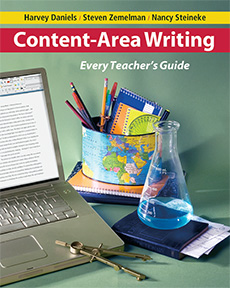
One thing that separates humans from, well most animals, are the tools of the trade. That’s no different for a teacher. Resources can help any teacher and the bigger the toolbox, the better the teacher. In my Literacy in the Content Classroom, we used two texts When Kids Can’t Read by Kylene Beers and Content-Area Writing by Harvey Daniels, Steven Zemelman, and Nancy Steineke, both of these were great inspirations. They helped me decided not just what to assign, but also how to assign it. Some of these tasks are very complex, and I was no way ready to attempt a lot of these things my first year, and maybe not for my first few years, but there are great ideas in here, especially when I have that dreaded “five minutes before the bell rings, and you’ve gotta pull something out of your as—uh, hat.”

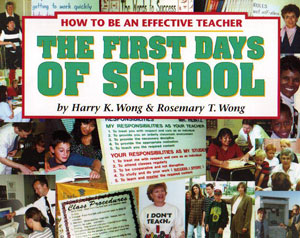
Of course, Harry Wong’s The First Days of School also helped me out in always trying to be professional, maintain high expectations, and to just generally be in a good mood in the class. I did try to keep the attitude that if I acted like I wanted to be there then the students would take me more seriously. It must have worked to an extent as one student derided another teacher in front of me saying “he’s one of those new teachers that just doesn’t care,” meaning he didn’t realize I was greener than the teacher he was talking about. A good attitude and caring about students goes along way.

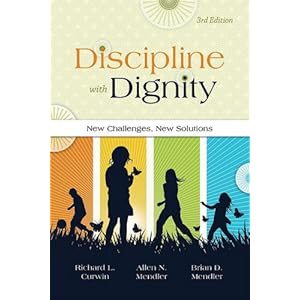
While I wasn’t always able to follow it to the letter, Discipline with Dignity by Richard L. Curwin, Allen N. Mendler, and Brian D. Mendler, at least gave me something to aim for when it came to dealing with troublesome students. Discipline was by far one of the most difficult tasks for this first year teacher. I didn’t want to shame, embarrass, or turn students off from learning, but I also wanted to be tough and respectful. Sadly, I rarely came across as any of those, but like most things, it’s a work in progress. Luckily, I had supportive administrators, but everyday was still a battle of motivation, management, and mitigation.

A strength I picked up early on was to connect my world to the classroom, and I usually used a handful of websites to help me in the classroom. Youtube.com should be an obvious resource. I had access to a Smartboard, and there’s something on there that links with just about everything. I used it to show videos of space shuttles launching, 1980s rap videos, and an interview with author Sandra Cisneros.

Time.com and NPR.org were great sources for finding articles about our culture and current headlines that I would use either to have students write about their world or open up a class discussion. I imagine great teachers can get even more in-depth than I did and go beyond content and discuss the way those types of news items have a different story structure than an essay, short story or poem.

If something has to be cobbled together in a pinch, Google is a limitless resource of finding teacher made videos and Power Points. First semester I would struggle to put together slide shows for note taking, until a teacher told me to search Google for ones already made. With a little tweaking I could make many of them fit, and every one I used was better than anything I could have created.

I kept my eyes and ears open to the world. When Osama Bin Laden was killed, I used that as a journal entry. When the Tsunami hit Japan, we watched videos, wrote and discussed the scenario. Don’t leave the world out of your classroom, it’s the best resource you have.

Tortoise Wins!


One thing I had to constantly is to remind myself was that I was supposed to be a bad teacher getting better. Besides a couple substitute teaching gigs and some classes, I had no classroom experience, and I’m sure I’m not alone in that situation. A first year teacher that has student taught at least has a little experience, but it’s still not enough to prepare one for actually teaching. It’s important to remember to go easy on yourself. All teachers make mistakes, and many first year teachers make more than their fair share, but it’s part of our job to find our mistakes and do our best to not make them again.

I came from a job where I was on the top of my game, and it was difficult to come to a job where I struggled. What generally happens to teachers is that they go into “survival mode,” but the key is not to get stuck there. Teachers need to remember that people have their back and everyone wants to see them do a great job. Don’t shut out friends, family, coworkers, and even students want to see teachers succeed and become better teachers. Don’t try to change the rules of teaching on the first rodeo, just do the best to stay on the bull.

Teaching content literacy is important for the student, and one thing they should be taught is to notice when they start making mistakes. The same applies to being a teacher. The first time a new concept or activity is introduced it might fail, but don’t give up on it. Tuck it away for now, come back to it and remodel it for the students. Find some key, easy strategies that work and then, as confidence grows, stretch and try new things. The journey of a first year teacher is really no different than the learning process students need to follow. Question tactics, activities and assignments, and make sure students are receiving the most from them. In turn students will also being to question, analyze and reformulate just as teachers do. Teaching can be monkey see monkey, and just as teachers learn, so shall they.

All Seeing Eyes

While there are many reasons to get to know students, one is to find out their ability. On the one hand, I was lucky that I taught an entire class of struggling readers, because I knew what the score was when it came to their abilities. Other content areas may not be so lucky, with one student being the valedictorian and another reading on a third grade level. Even within my class I had students of varying ability, and just because I had two students reading at a sixth grade level, it didn’t mean they each had the same reading strengths and weaknesses.It's especially hard for first year teachers to juggle content, their new job, and helping all the students with their various abilities, but it does get easier as the year progresses. Like my regular eyes, I still don't have 20/20 vision in my all-seeing-teacher-eyes, but things are coming more in to focus.

On the first day of school there should be a lot of “getting to know you stuff,” which should provide some insight into their abilities. First, make sure this student has been tested or has an IEP, otherwise it might be your job to bring it to someone’s attention. There was a bout two months of school left before a student came to me and admitted he might need a vision test because the words were jumping around on the page. That’s another reason to build a relationship with students, if they don’t trust the teacher, they won’t reveal that kind of information. It’s easy to spot a kid that squints at the board, but it’s not easy to spot what’s going on inside their gray matter.

If the student has an IEP, it needs to be followed, not just because it will help the student; it’s also the law. A lot of times the information in the IEP will be what the student needs to be successful, such as: modified tests, assignments or read-alouds. Many students are embarrassed about their mods, especially ones that separate them from the heard, but they’re in place for a reason, and many of those students really needed those read alouds or those seating assignments. Just because that student can’t read very well, doesn’t mean they’re not capable of functioning like a scientist or have interesting experiences to bring to the class.

The more that student is utilized in class and the more comfortable they are means they won’t act up as much and are more likely to do the work. It might mean you have to grade them differently or assign them less, but all students deserve success. When making group for that student, place them with a student that has higher abilities, remember they’re going to learn more from their peers than they are from you jawing.

Sharing is caring


Of course, there are times when they don’t want to run their mouths, at least not about theater arts. Who are these students? Why are they unengaged? You mean to tell me they don’t like factoring binomials? You’re crazy!

Sad, but true, not every student likes your content area (I’m looking at you math), but sometimes it goes deeper than that. Students may not be on grade level for their reading ability, have a disability, or they could be suffering from some emotional distress. I had a lot of problems with this my first year, and being honest, I didn’t do such a hot job all the time in dealing with these situations. There’s a lot at stake here for those kids and you, and the best advice I can give is to be understanding. They will try your patience to be sure, and you might even blow up at them, but one of the easiest things to do is check up on them in their other classes. There were a lot of times where I didn’t know how to help a student, so I asked my more experienced peers and sometimes they offered a more seasoned perspective.

Another way to promote check in on students and utilize content literacy is through writing assignments, journals, or projects that they have a voice and a story that deserves to be heard. Granted, my class was Language Arts, so we journaled everyday, but that doesn't mean that journal couldn't be kept in Math class. Journals could be the springboard to great discussions, write about problems they have in class, or just gauge their opinion on a topic in the news. If I had used small groups the discussions may have even been better. As I said earlier, sometimes I had a lot of students write some shocking things and I was down in guidance every other day with journals in hand, and I probably got a reputation for it. It was a reputation I was happy to have, students knew they could come talk to me and that I was there for them, but that's why we're there, right? Okay, that and the summers.

Sadly, I had a student write about she she used to cut herself. To make sure all was well, I sent her journal to guidance, and they checked up on her. She was not pleased about this and confronted me with in ear-shot of another student I had sent to guidance who had written about being abused. One girl told the other: “Mr. C isn’t getting you in trouble, he just cares about us,” and she was right.